Adaptive Reuse Former Factory to Fusion Fitout | London | UK
Toolkit for Sustainable Retrofit of Derelict Factories to Mixed Use
London | UK
1 acres
8000 sq.m
2022
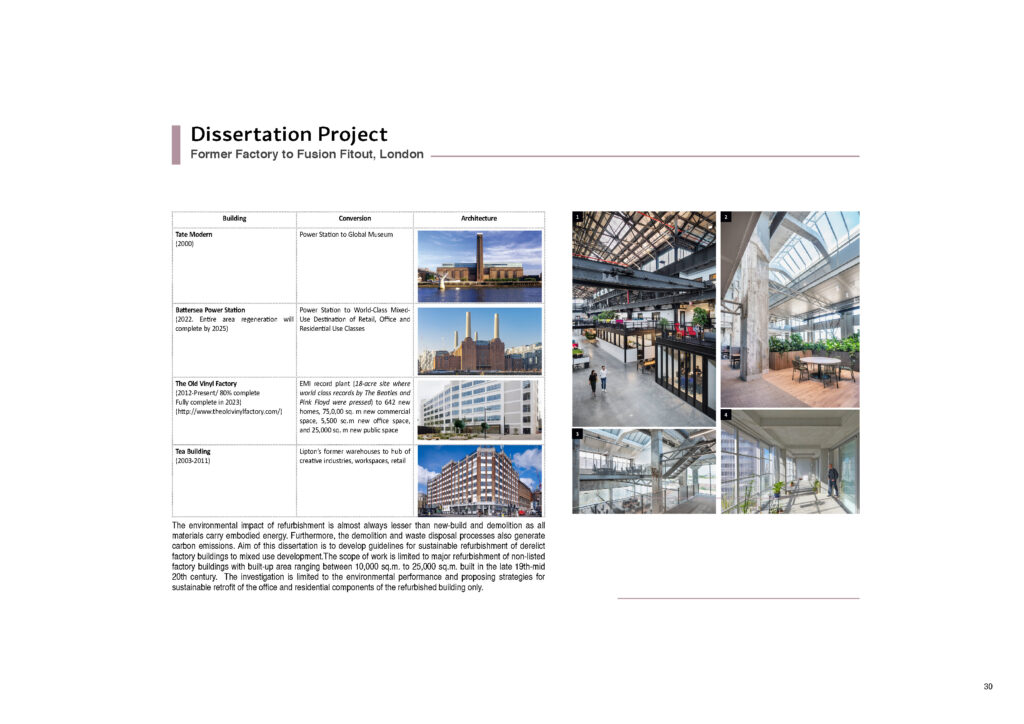
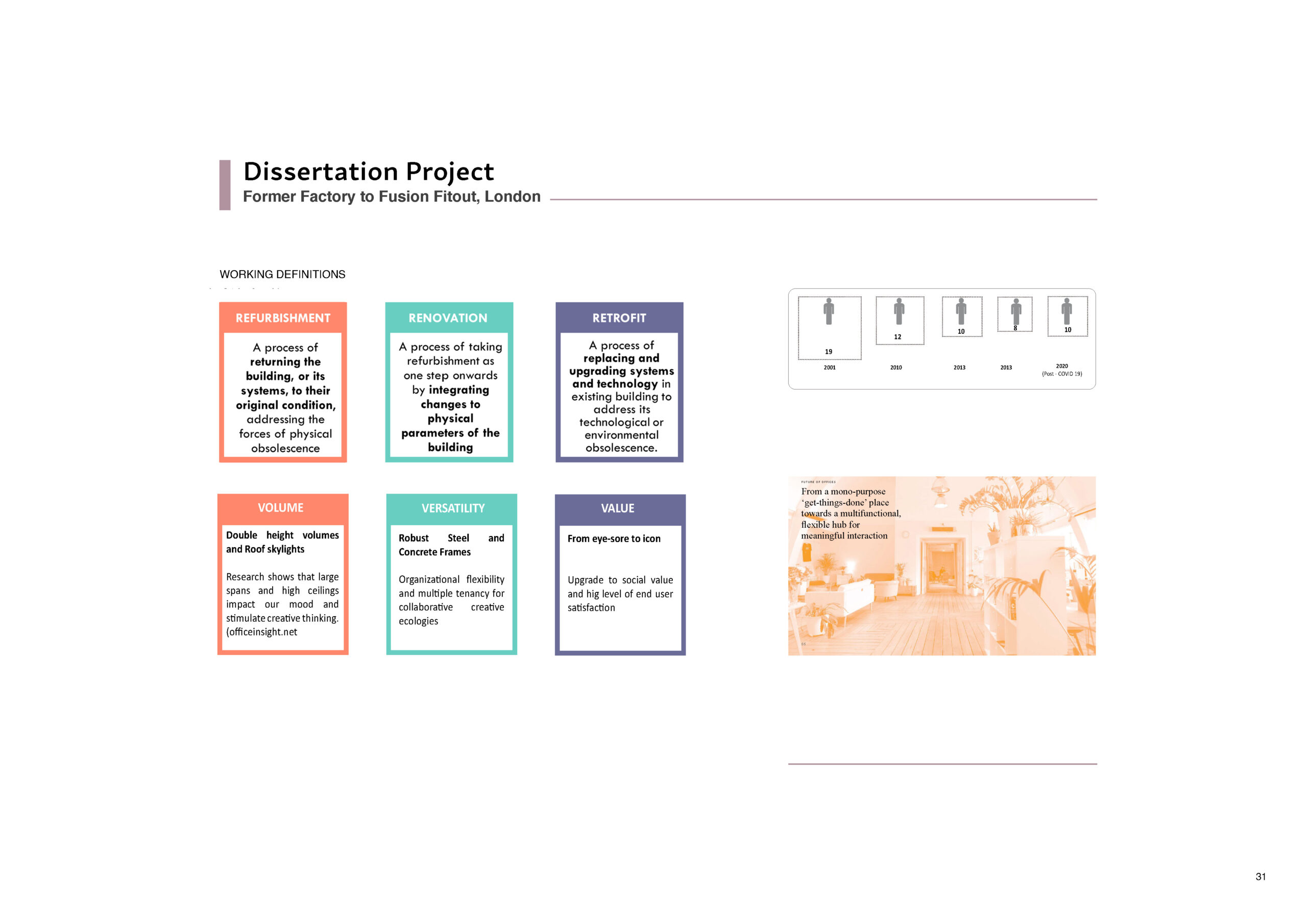
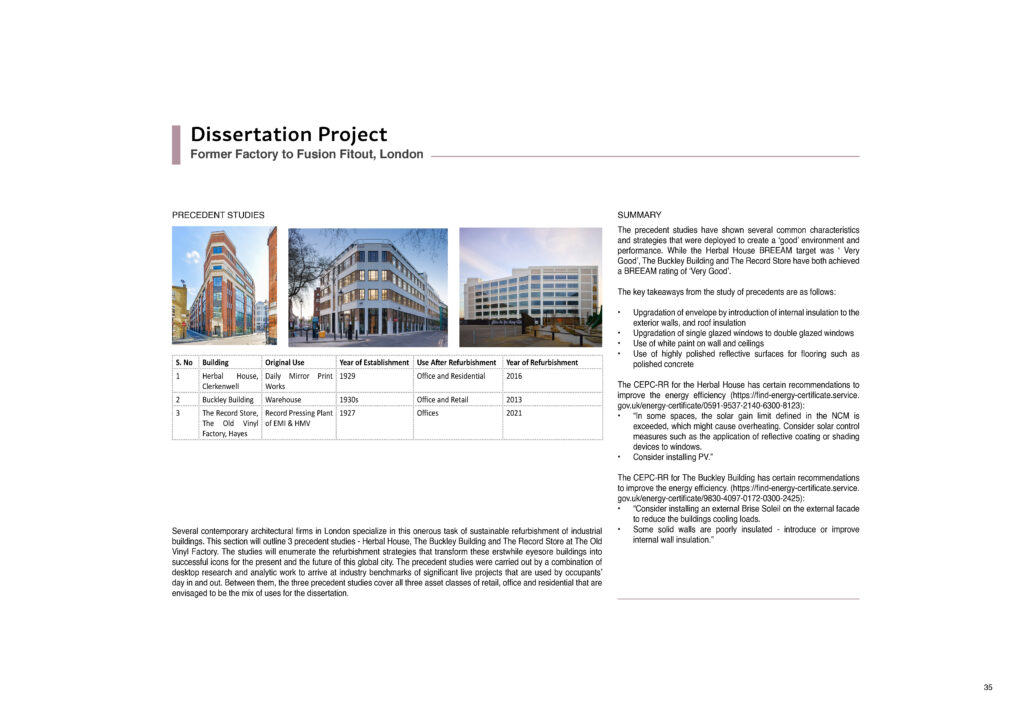
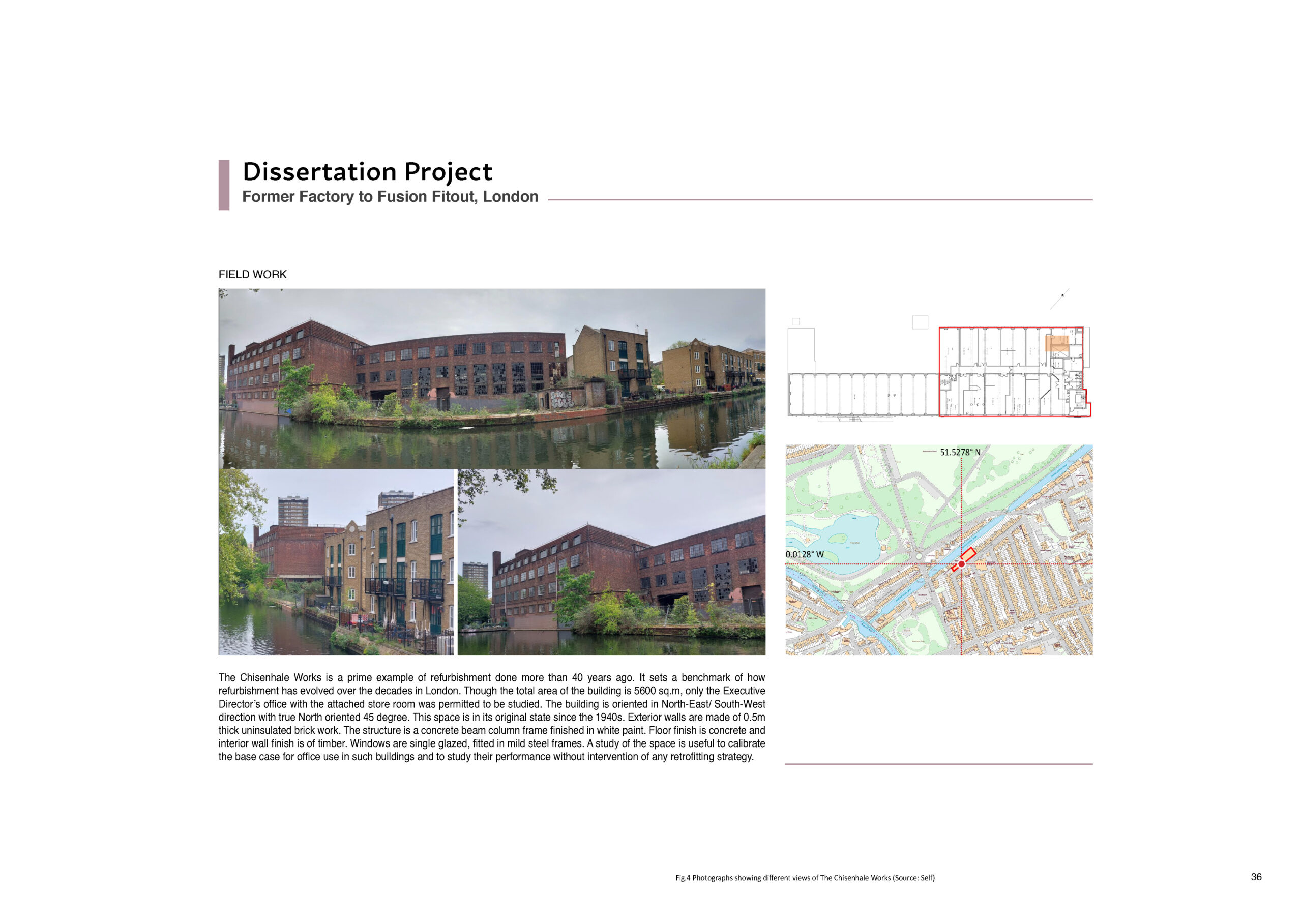
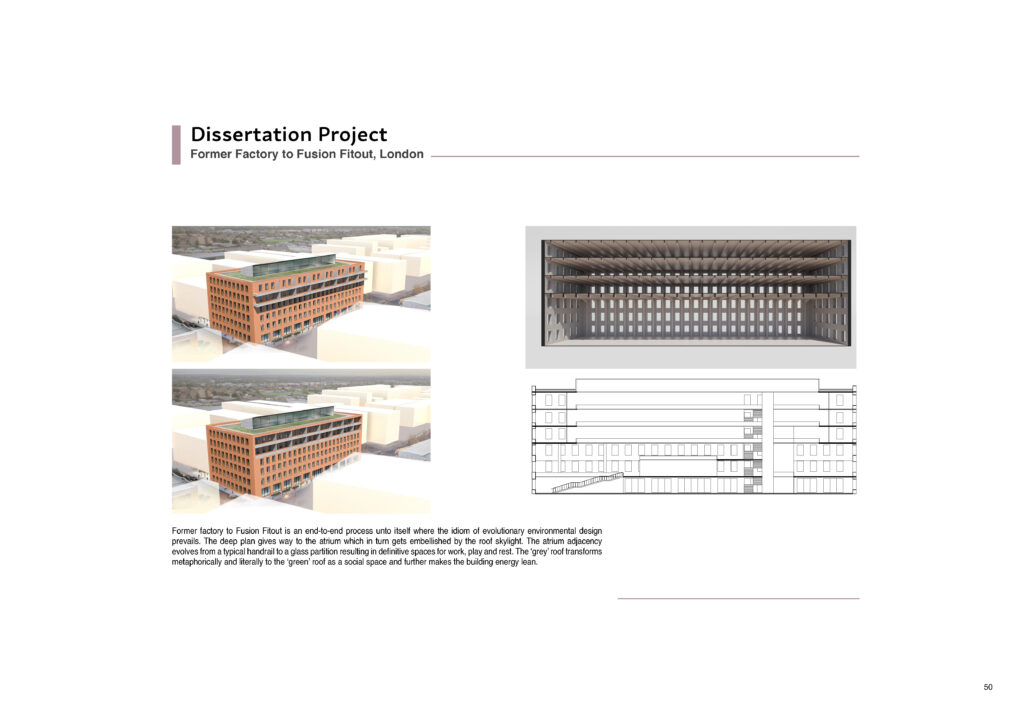
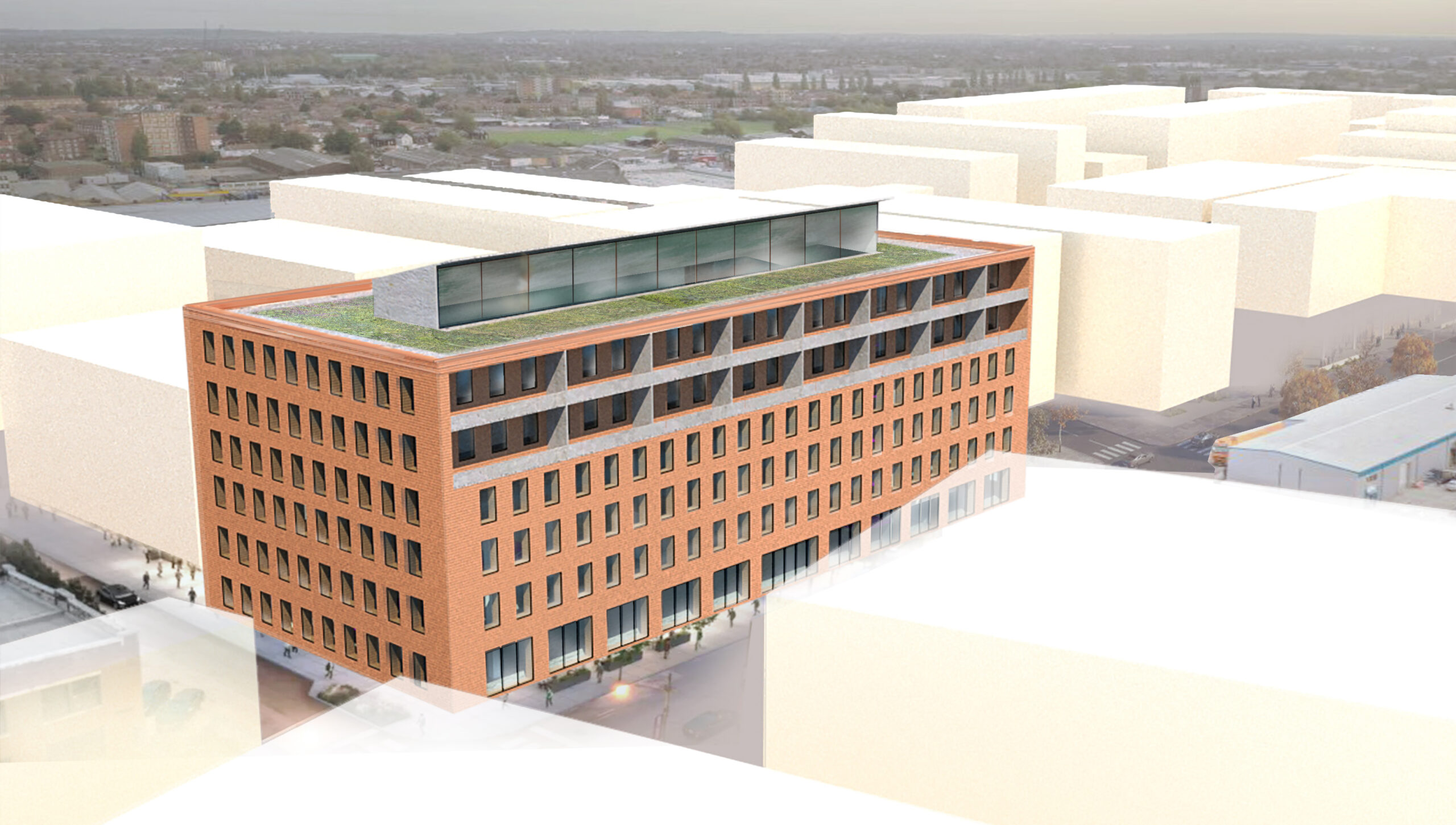
This project was the Dissertation of the Founder – Principal Architect at the M.Sc Sustainable Environmental Design program at the AA London for the year 2021-2022. Cities all over the world are faced with the phenomena of de-industrialization wherein manufacturing industry plants have moved out and what stand in their stead are derelict buildings. Previously located on the outskirts of cities, these structures have come to occupy what is now prime city centre land due to the phenomena of urban sprawl. London is a prime example of such a situation. Once the seat of the Industrial Revolution and home to a diverse set of industries, the London post-industrial landscape is replete with defunct power stations, warehouses, factories, lime kilns, breweries, mills and foundries. Quite a few of them are even Listed buildings due to their historical and cultural significance. This dissertation examines refurbishment of derelict industrial buildings in London into mixed use conversions. The scope of this investigation is limited to non-listed factory buildings with built-up area ranging between 10,000 sq.m. to 25,000 sq.m. The merits of refurbishment of such buildings are known to be manifold. First is preservation of the rich industrial heritage which is an identity marker for the city, second is to reconnect these urban voids into the city morphology and finally refurbishment is a tool to reduce carbon emissions that are generated by new build.
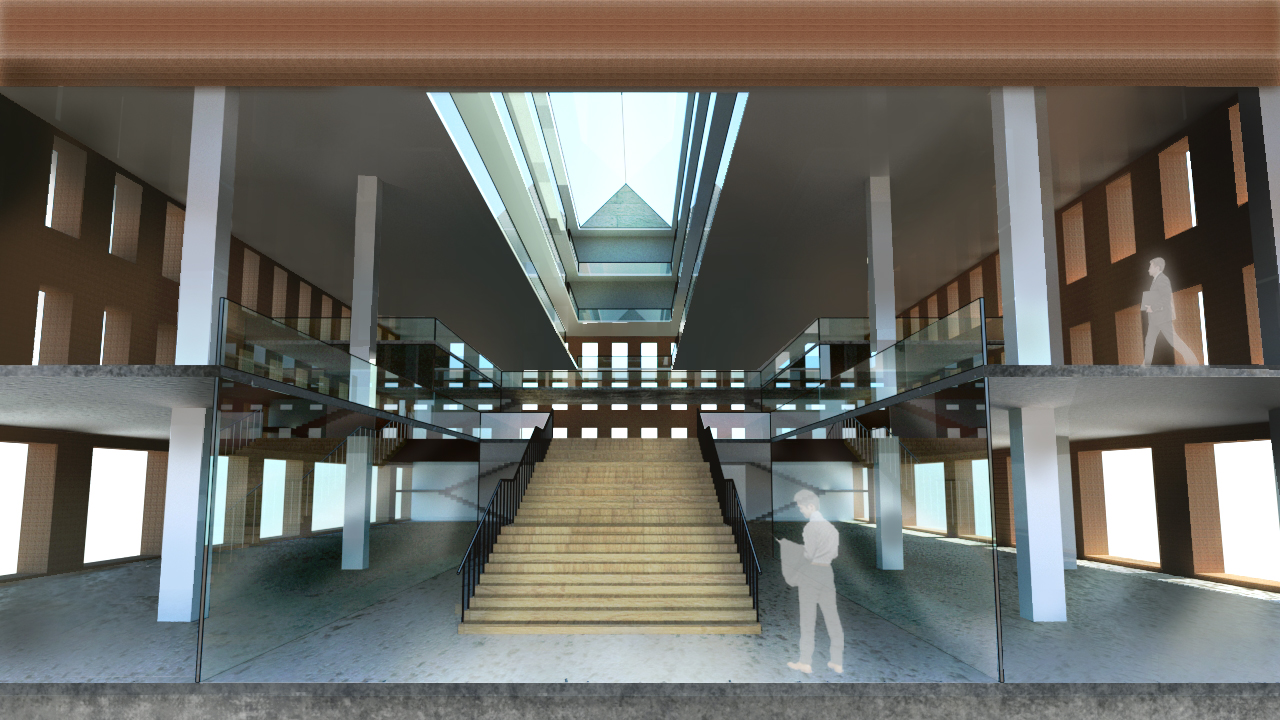
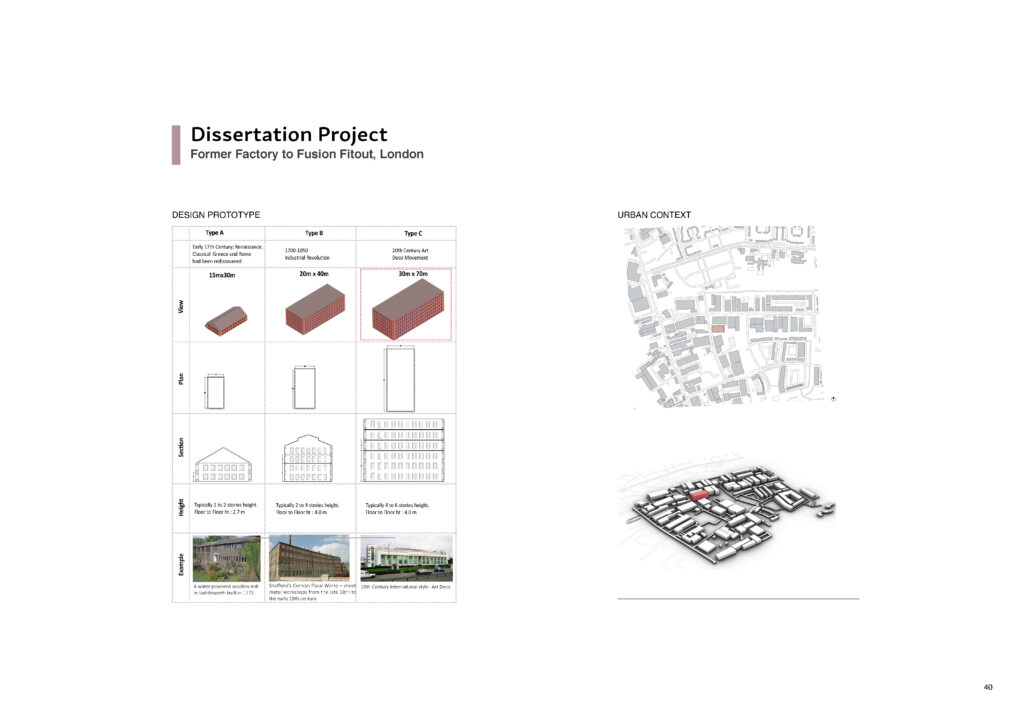
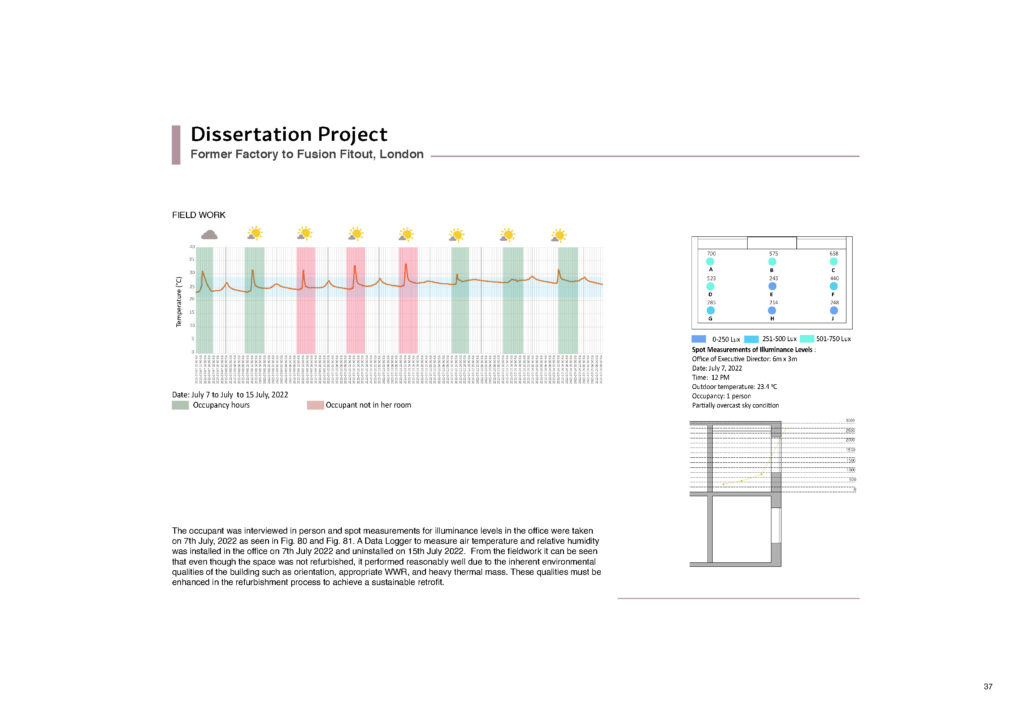
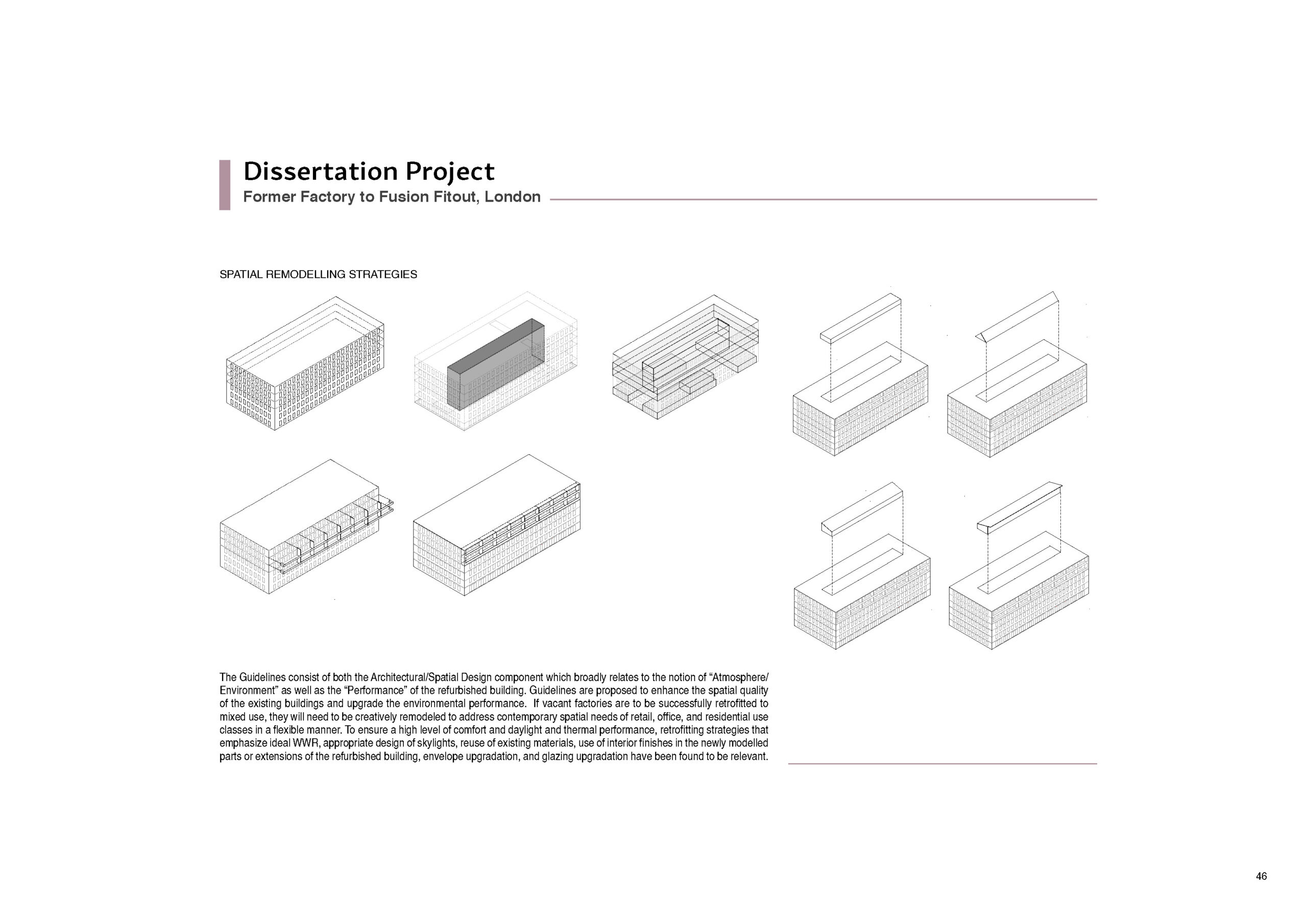
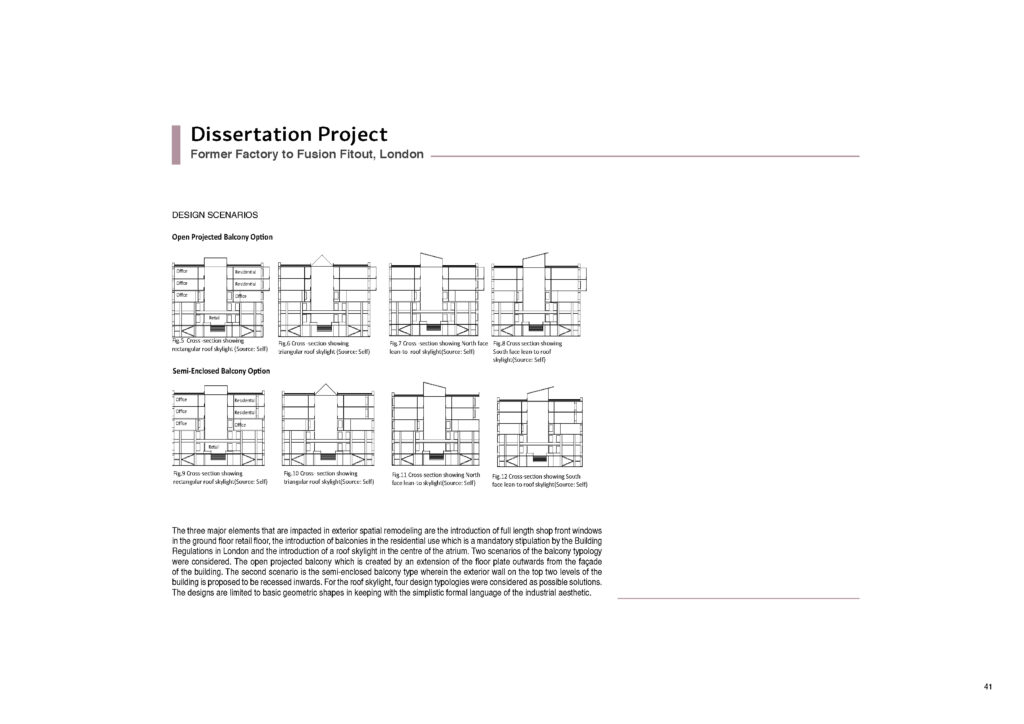
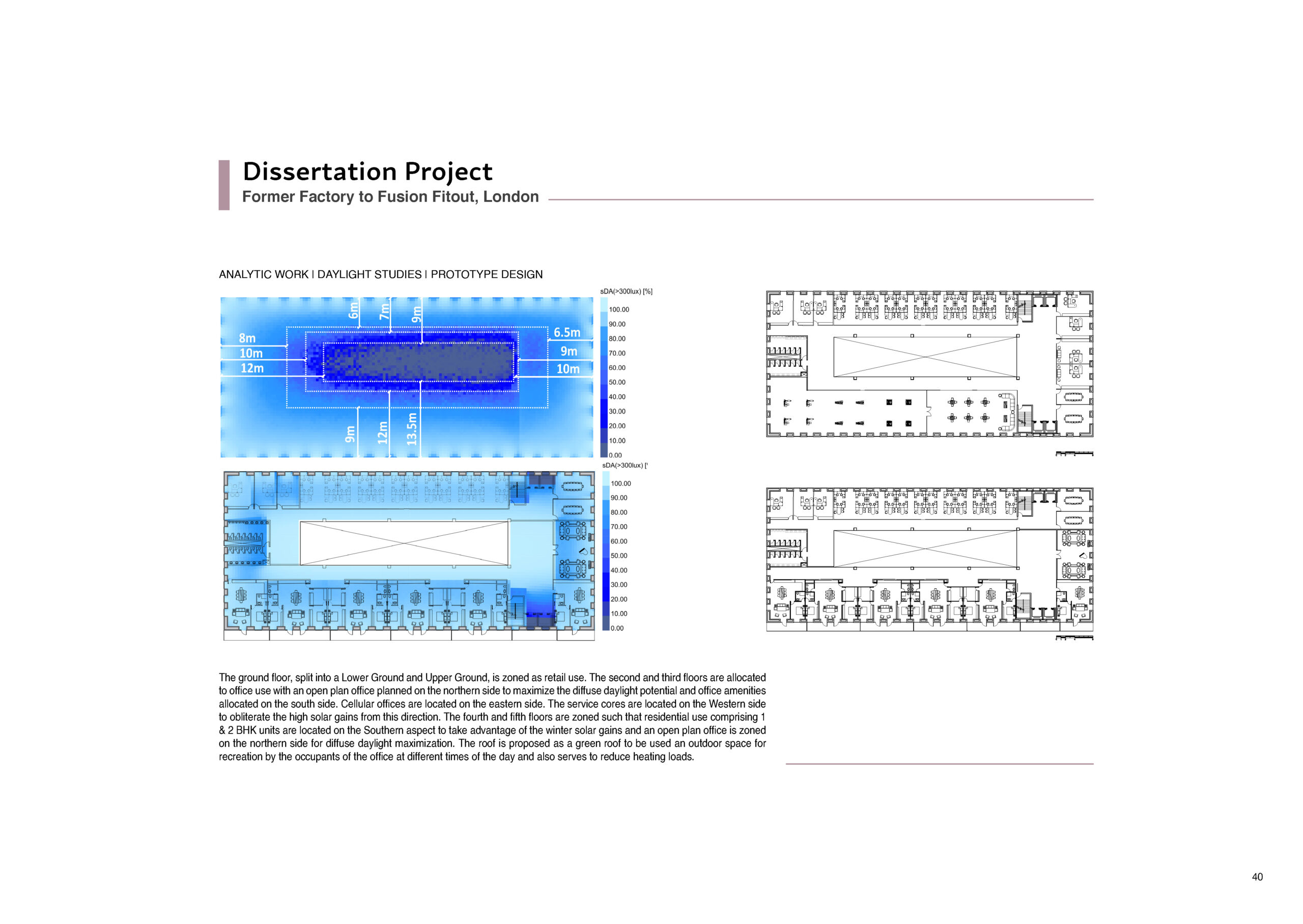
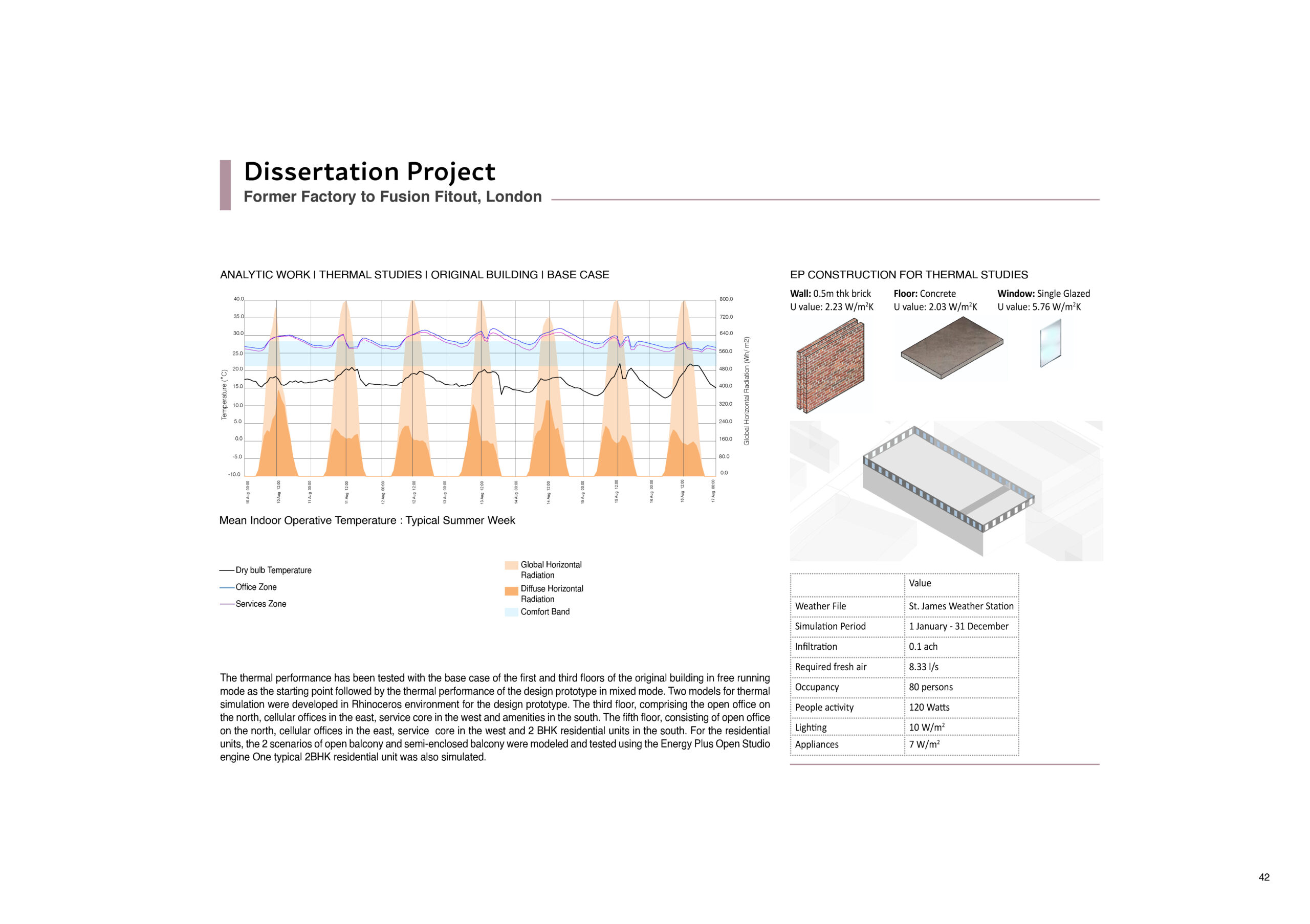
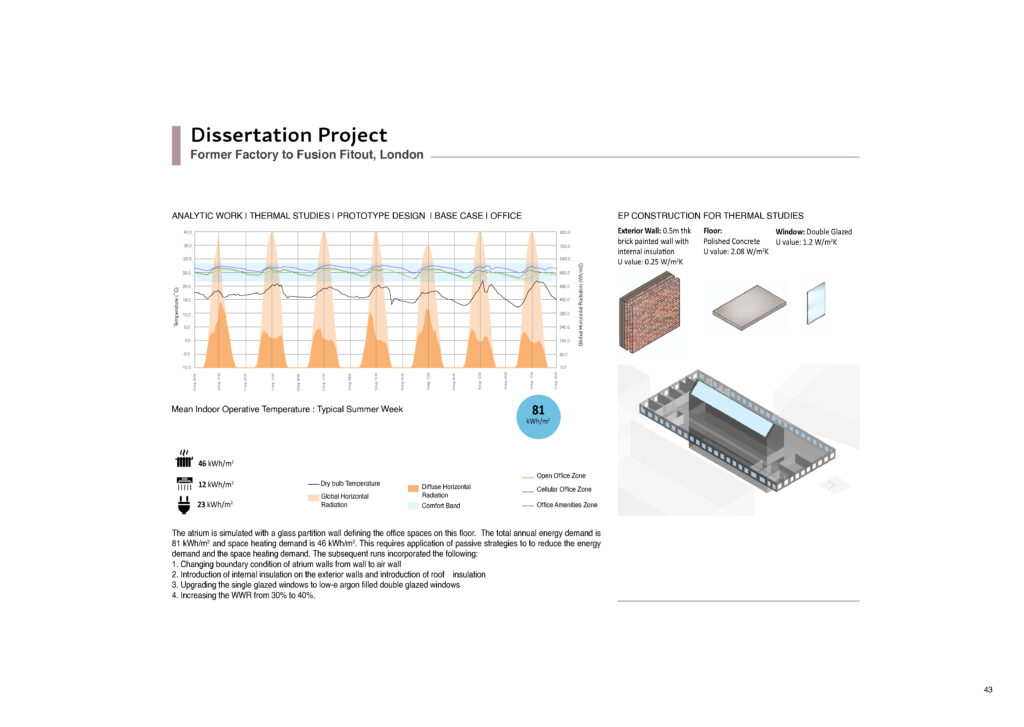
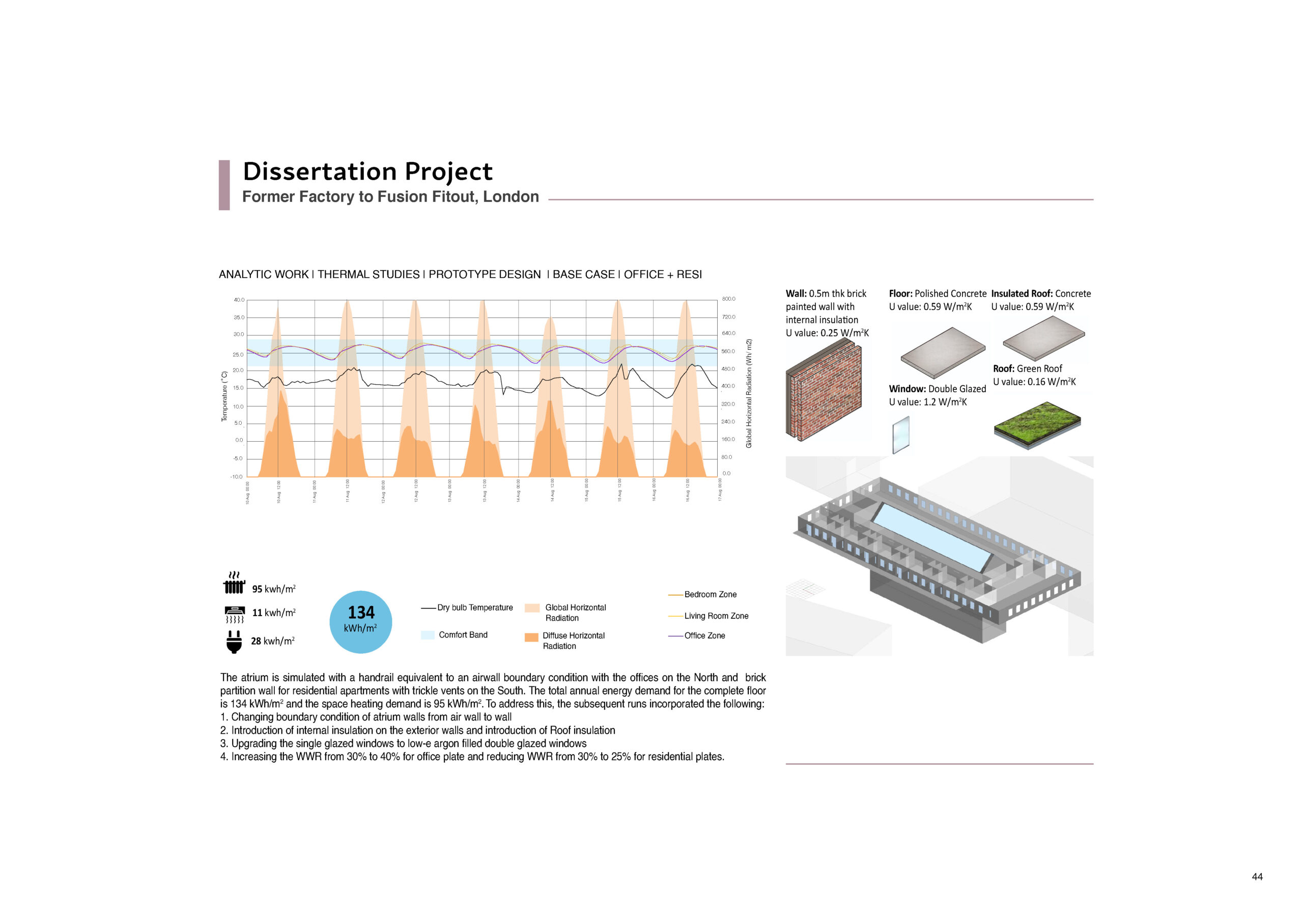
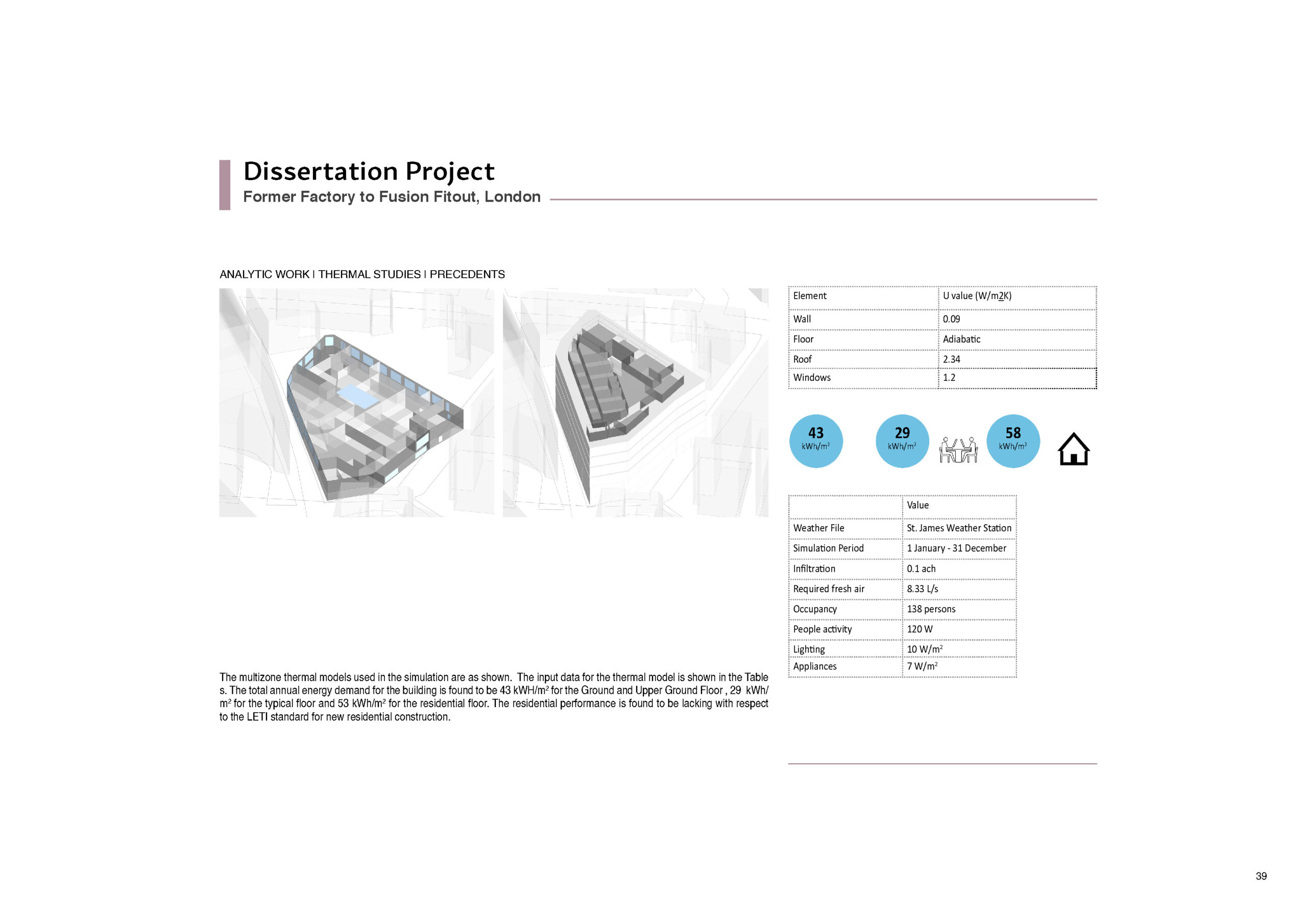
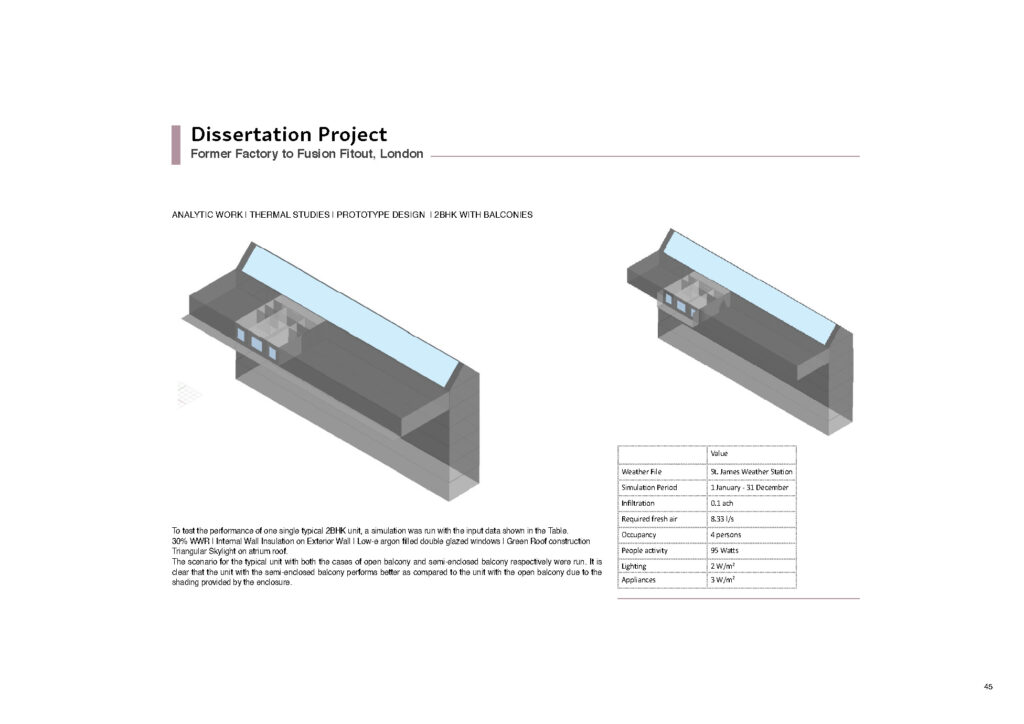
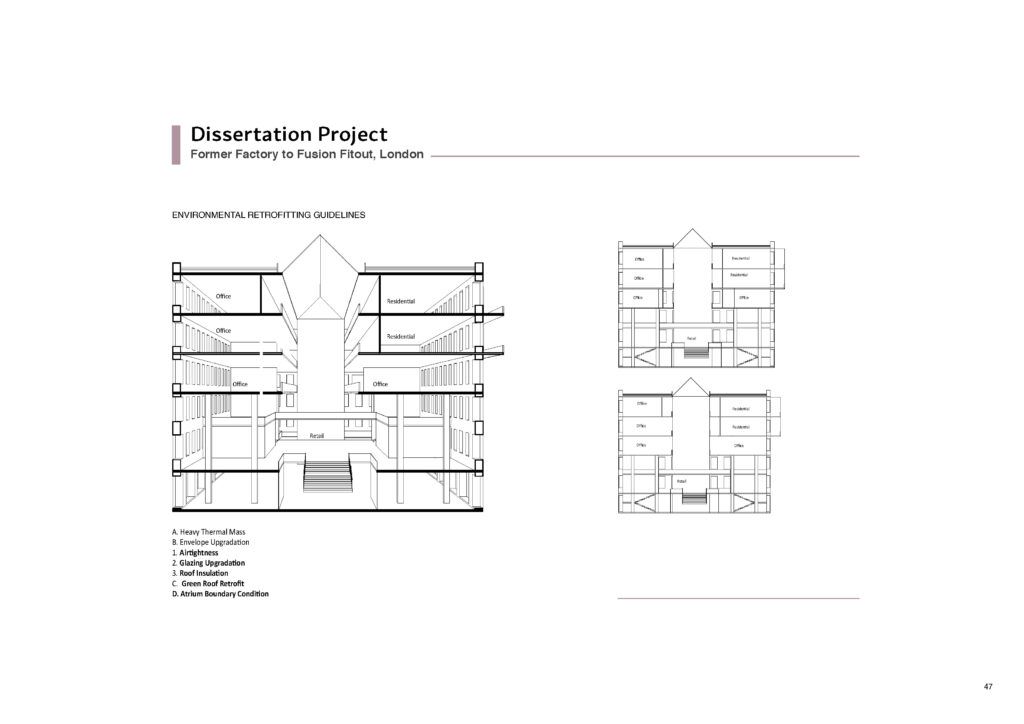
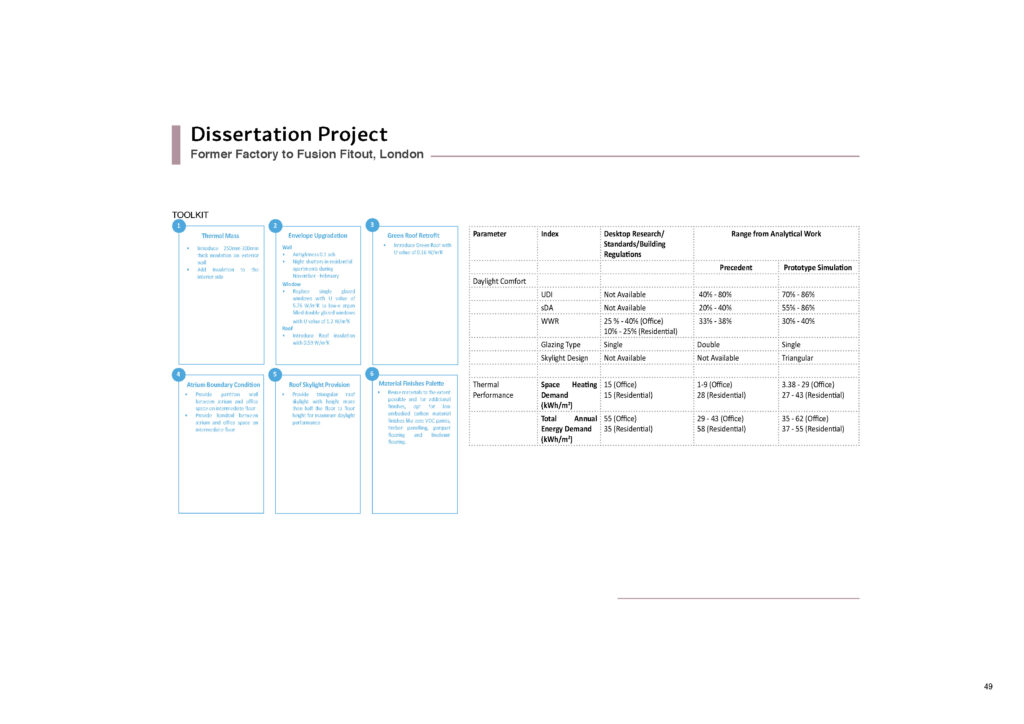
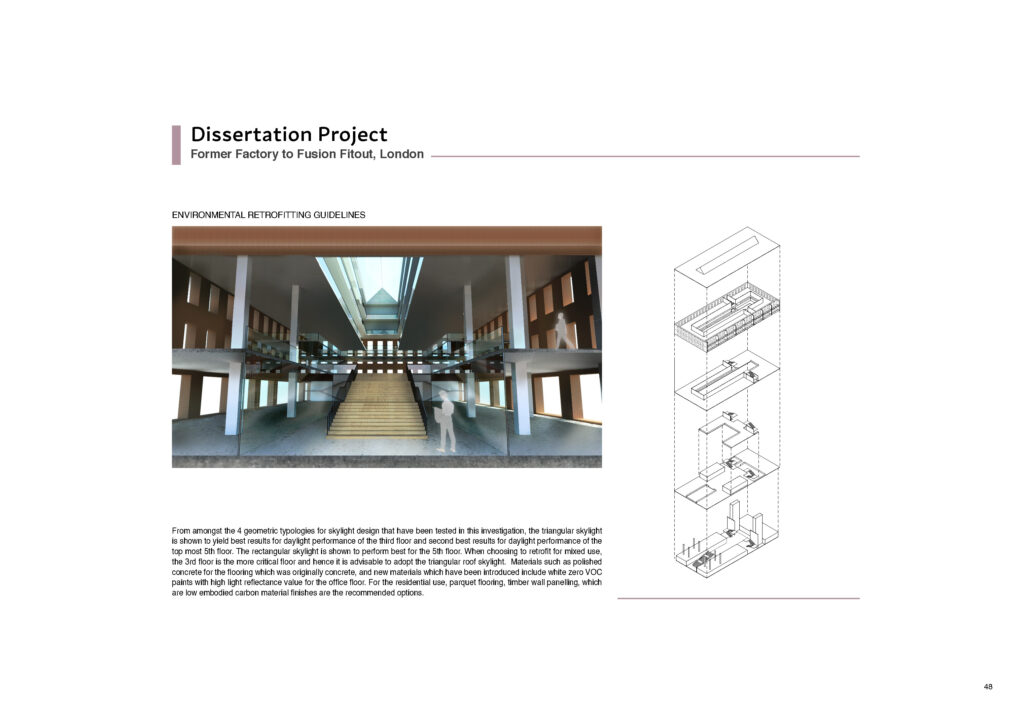
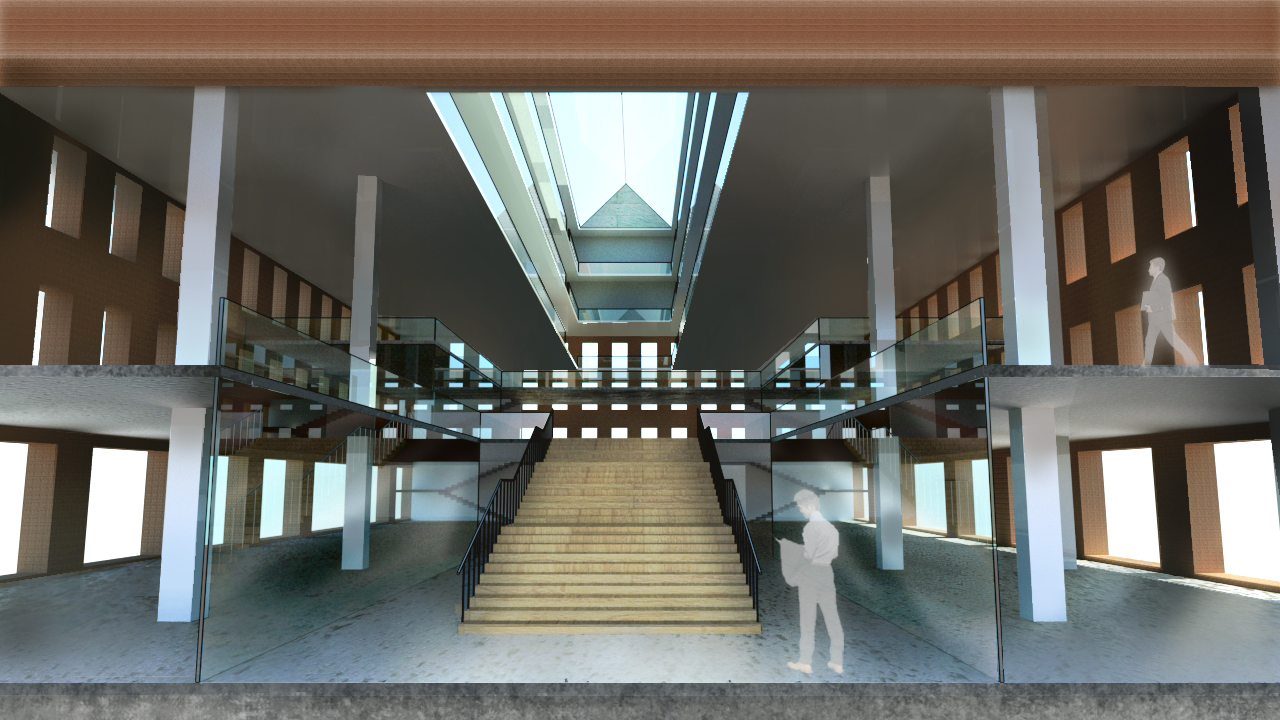
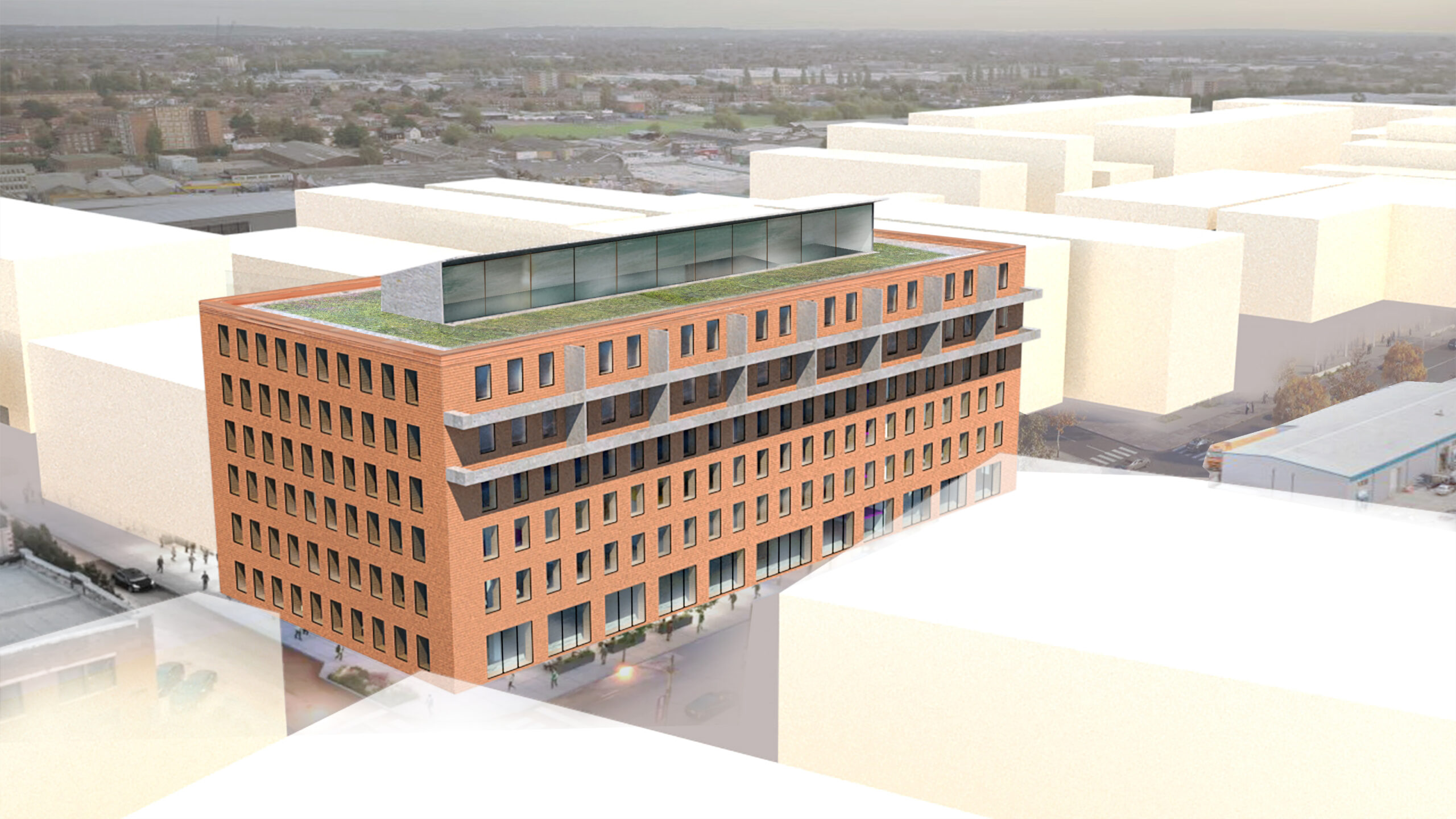
A 30m x 70m deep plan building is the prototype for the investigation into its conversion into the mixed use classes of retail, workplace and residential. The dissertation has derived the theoretical base from desktop research and examples of performative environment from three precedent studies to develop a framework for benchmarking the design possibilities of the prototype. This is followed by fieldwork and analytical work to calibrate the base case and derive a range of performance standards for the protoype which forms the recommendations for the Toolkit for sustainable retrofit of such building typologies.